
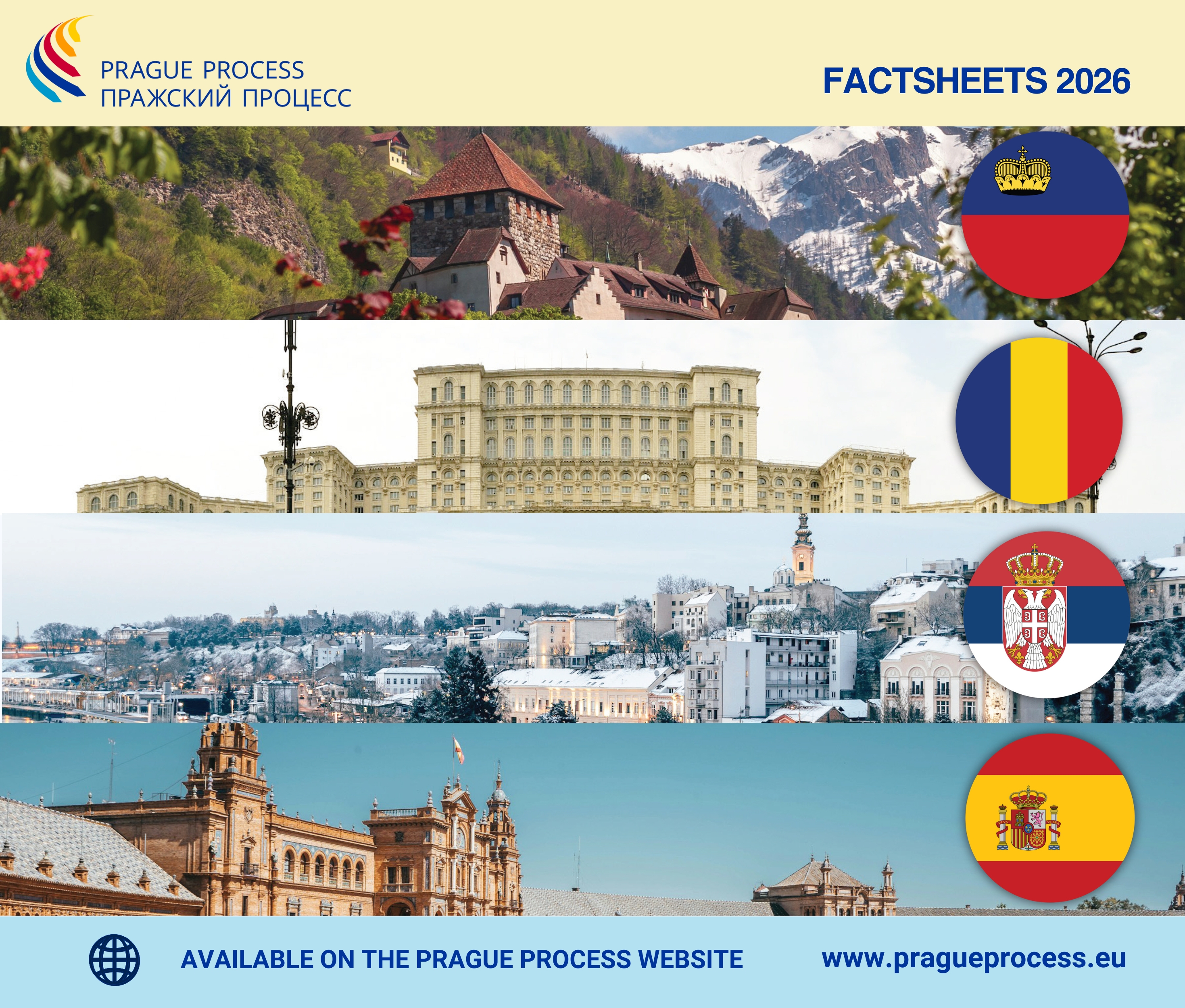
We have the pleasure to inform you that the Prague Process has introduced the regular update of the country factsheets, now featuring the latest migration-related trends and policy developments in Liechtenstein, Romania, Serbia and Spain.
Here are a couple of highlights that offer a glimpse into recent developments. Explore the full version of the factsheets to review the detailed analysis and data.
Liechtenstein: Migration-driven population growth
- In 2024, its population reached 40,886, with Liechtenstein citizens accounting for about two-thirds (26,518). Foreign nationals numbered 14,368, mainly Swiss (27%), Austrians (16.6%), Germans (13.5%), and Italians (8.4%), while all other nationalities each represented less than 5%. Population growth in 2024 was driven almost entirely by migration: natural increase added just 39 people, compared with net migration of 832, resulting in a 2.2% population rise from 2023.
Romania: Non-EU labour inflows
- Labour migration to Romania has expanded rapidly in recent years, driven by strong employer demand, low entry barriers, and rising annual quotas. Employment authorisation requests climbed from 29,000 in 2020 to over 130,000 in 2024, with the 100,000-permit quota fully used each year since 2022 – although only about one-third of issued authorisations translated into actual arrivals. The number of non-EU nationals holding valid full-time contracts doubled from 54,000 in 2021 to nearly 140,000 in 2024, concentrated in low-skilled sectors; EU Blue Card holders remain below 1%. In 2025, non-EU workers were most represented in production (29,141), construction (28,538), trade (20,008), HoReCa (18,844), and administrative/support services (12,189). Nepal, Sri Lanka, Türkiye and India remained the main source countries, together accounting for over 60% of for agricultural, construction, cleaning, and cargo-handling workers.
Serbia: Geopolitical relocation-driven migration
- Immigration to Serbia, though previously limited, expanded rapidly in the early 2020s, climbing from 9,312 arrivals in 2020 to 41,273 in 2023. The 2023 flow was dominated by Russian (55.6%), Chinese (15.4%) and Indian citizens (4.9%), reflecting geopolitical business relocation and project-based labour recruitment. In 2024, first-time temporary residence permits fell to 34,131 (−24% from 45,112 in 2023) yet remained several times higher than in 2020-2021. Russians received 49% of new permits and dominated those granted for employment, family reunification and education, suggesting household relocation to Serbia, while Chinese and Indian nationals mostly received employment permits linked to corporate and infrastructure investments.
Spain: Rising diversified non-EU migration
- Migration is a central driver of demographic growth and labour force renewal. Eurostat confirms a steady rise in first residence permits issued to non-EU nationals from 312,355 in 2020 to 561,640 in 2024. Most permits in 2024 were granted to nationals of Morocco (92,817), Colombia (75,662) and Venezuela (48,409) on family reunification grounds (46%) and for education (20.8%), followed by employment (17.4%) and other reasons (16.1%). According to the OECD, Spain maintains a diversified framework of work-related permits, including seasons schemes such as GECCO in agriculture, traineeships, intra-company transfers, digital nomads, and researcher mobility.
All the factsheets can be accessed through the interactive map here.
The factsheets offer concise and valuable insights in the migration landscape of these countries, providing data from both national and international sources. They also highlight key developments in migration policies and legislation. While the national data is updated by the Secretariat and ICMPD colleagues as well as external experts, the data from international sources is refreshed automatically as it becomes available.
Our Repository contains the latest publications of the Migration Observatory and Training Academy of the Prague Process.
Subscribe to the Prague Process mailing list here in order to keep up to date with the latest developments through our Quarterly Review.