
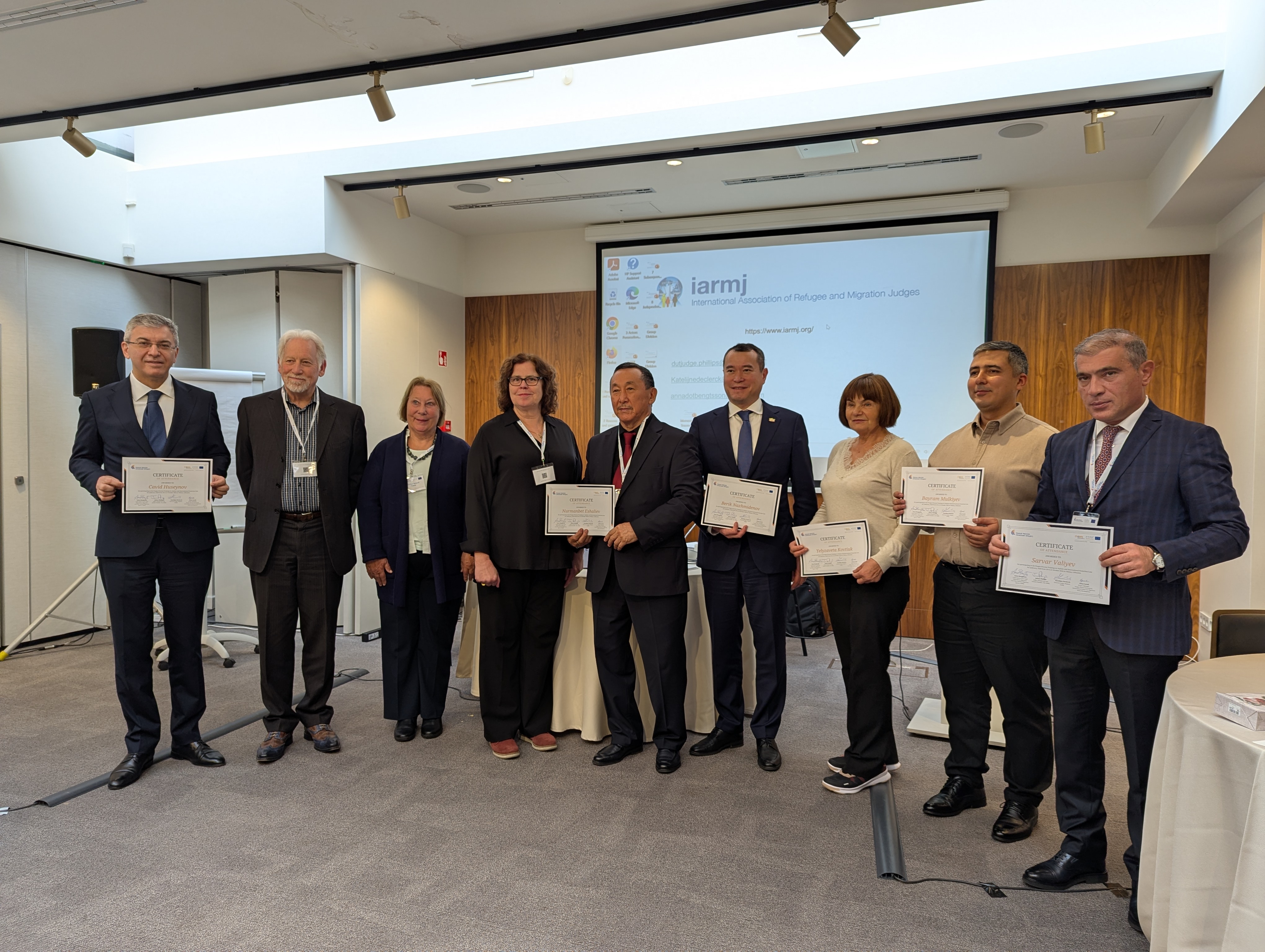
As asylum systems face evolving legal and practical challenges, judges and asylum practitioners from 11 Prague Process participating states gathered in Vilnius on 20-22 October 2026 for a three-day training dedicated to asylum and international protection law. Hosted by the Lithuanian Ministry of the Interior and organised as part of activities of the Prague Process Training Academy and the Thematic Component 4 (TC4) on Asylum and International Protection, the training brought together 22 participants, primarily judges and officials working in the field of asylum and international protection. The training sought to strengthen judicial expertise, encourage the exchange of national experiences and promote consistent application of international and European protection standards.
Opening the training, Gintaras Valiulis, Chief Adviser in the Migration Policy Group of the Lithuanian Ministry of the Interior and TC4 Leader, highlighted the growing importance of regional cooperation in responding to an evolving migration landscape. He emphasised the judiciary’s essential role in safeguarding fundamental rights, upholding the rule of law and ensuring the effective implementation of asylum legislation, particularly in light of the EU Pact on Migration and Asylum. Irina Lysak, Project Manager at the Prague Process Secretariat, echoed the importance of maintaining strong protection standards amid ongoing legislative changes, stressing that the fundamental principles of international protection must remain at the heart of asylum decision-making.
Led by three experts from the International Association of Refugee and Migration Judges (IARMJ) - Mr Julian Phillips, Judge at the Immigration and Asylum Chamber in the United Kingdom; Ms Katelijne Declerck, Honorary Judge from Belgium; and Ms Anna Bengtsson, Legal Expert at the Swedish Migration Agency – the training combined legal analysis with practical insights into the challenges faced by judges and asylum authorities.
Navigating the Complexities of Refugee Protection
Over three days, participants examined some of the most complex questions arising in asylum proceedings: What constitutes persecution? How should a well-founded fear of persecution be assessed? Who can provide effective protection, and under what circumstances? How should judges evaluate evidence when applicants are unable to substantiate every aspect of their claims?
Discussions covered the grounds for refugee status, the principle of non-refoulement, the identification of actors of persecution and protection, and the use of Country-of-Origin Information (COI). Attention was paid to evidence assessment and credibility, both central to determining international protection claims. The programme also explored the interaction between international and European legal instruments, including the 1951 Refugee Convention, the European Convention on Human Rights (ECHR) and the International Covenant on Civil and Political Rights (ICCPR). Through an examination of Article 3 ECHR, subsequent asylum applications and relevant European case law, participants considered how judicial interpretations shape asylum decisions at national level.
A dedicated interactive session explored the impact of memory and trauma on asylum applicants’ testimonies. It highlighted how traumatic experiences, including sexual violence, may affect memory, the disclosure of sensitive information and the consistency of accounts. The discussion underlined the importance of trauma-sensitive interviewing, reliable interpretation and avoiding assumptions about an applicant’s credibility based solely on inconsistencies or delayed disclosure.
From Legal Theory to Judicial Practice
A strong practical dimension ran throughout the training. Participants worked in small groups on case studies adapted from real court cases, examining complex protection claims involving political persecution, gender-based violence and the availability of effective protection within countries of origin. These exercises encouraged participants to apply the legal concepts discussed, assess different types of evidence and exchange perspectives on judicial decision-making. The final day focused on practical approaches to handling asylum cases and introduced participants to existing judicial training resources, including the EU Agency for Asylum (EUAA) Judicial Analyses and materials available through IARMJ.
Combining expert presentations, plenary discussions, interactive exercises and peer-to-peer exchange, the training provided a valuable opportunity for judicial professionals and asylum practitioners to deepen their legal knowledge and learn from experiences across the region. It also contributed to strengthening professional networks and promoting a shared understanding of international protection standards.