
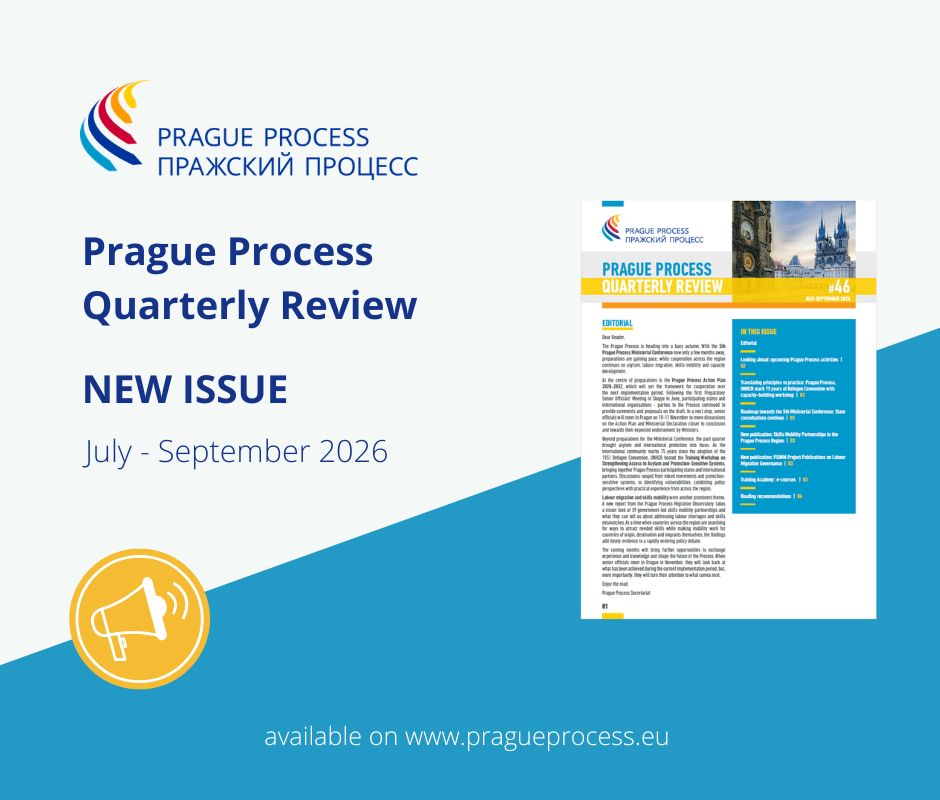
We are pleased to present the July-September 2026 edition of the Quarterly Review, featuring the latest updates from the Prague Process.
The Prague Process is heading into a busy autumn. With the 5th Prague Process Ministerial Conference now only a few months away, preparations are gaining pace, while cooperation across the region continues on asylum, labour migration, skills mobility and capacity development.
At the centre of preparations is the Prague Process Action Plan 2028-2032, which will set the framework for cooperation over the next implementation period. Following the first Preparatory Senior Officials’ Meeting in Skopje in June, participating states and international organisations - parties to the Process continued to provide comments and proposals on the draft. In a next step, senior officials will meet in Prague on 10-11 November to move discussions on the Action Plan and Ministerial Declaration closer to conclusion and towards their expected endorsement by Ministers.
Beyond preparations for the Ministerial Conference, the past quarter brought asylum and international protection into focus. As the international community marks 75 years since the adoption of the 1951 Refugee Convention, UNHCR hosted the Training Workshop on Strengthening Access to Asylum and Protection-Sensitive Systems[IL1] , bringing together Prague Process participating states and international partners. Discussions ranged from mixed movements and protection-sensitive systems, to identifying vulnerabilities, combining policy perspectives with practical experience from across the region.
Labour migration and skills mobility were another prominent theme. A new report from the Prague Process Migration Observatory takes a closer look at 39 government-led skills mobility partnerships and what they can tell us about addressing labour shortages and skills mismatches. At a time when countries across the region are searching for ways to attract needed skills while making mobility work for countries of origin, destination and migrants themselves, the findings add timely evidence to a rapidly evolving policy debate.
The coming months will bring further opportunities to exchange experience and knowledge and shape the future of the Process. When senior officials meet in Prague in November, they will look back at what has been achieved during the current implementation period, but, more importantly, they will turn their attention to what comes next.
[IL1]please update the title of the activity