
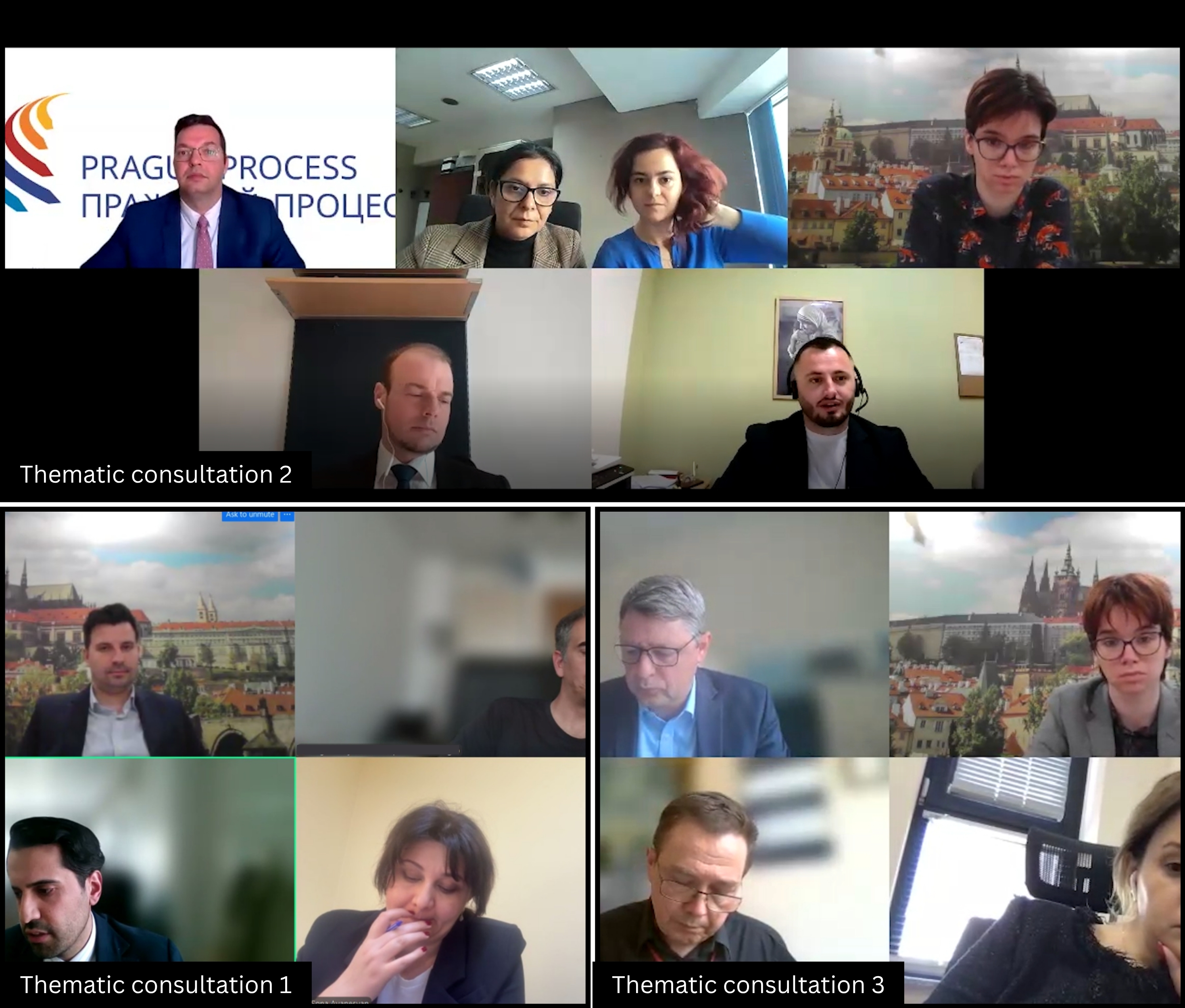
In preparation of the 5th Prague Process Ministerial Conference, which the upcoming Lithuanian EU Presidency will be hosting in Vilnius in January 2027, the Parties have engaged in intergovernmental consultations with a view to jointly elaborating the Prague Process Action Plan 2028-2032 that Ministers shall endorse to set the future mandate of the Process.
Between March and May, three thematic consultations were held to discuss the individual provisions under the Action Plan’s six thematic areas - irregular migration, return and reintegration, labour migration, integration, migration and development, as well as asylum and international protection. In parallel, a Questionnaire was distributed to the Parties to assess the implementation of the current Action Plan, review evolving migration trends, and identify priorities for the next implementation cycle. While the consultations confirmed the continued relevance of the thematic priorities, they also underlined the need to review and adjust them to ensure responsiveness to evolving realities. Participating states called for a stronger emphasis on implementation, ensuring that priorities are translated into practical cooperation and concrete actions with measurable results.
To achieve this, participating states consistently highlighted a set of cross-cutting priorities that should be reflected across all thematic areas of the Action Plan:
- Digitalisation of migration governance
- Capacity building and peer-to-peer learning
- Operational cooperation among migration authorities
- Timely information exchange
- Resilience and preparedness for emerging challenges
- Evidence-based policymaking and strong analytical capacities
- Monitoring and evaluation
- Whole-of-government approach
Alongside these cross-cutting priorities, the consultations identified several emerging topics that are gaining greater prominence in the provisions of the Action Plan. These include:
- Artificial intelligence and its application in migration governance
- Instrumentalisation of migration
- Skills mobility and labour migration pathways
- Labour market integration
- Crisis preparedness
- Interoperable systems
- Diaspora engagement
- Alignment with the EU Pact on Migration and Asylum
- Innovative solutions and approaches to migration management
These emerging priorities reflect evolving migration realities and recent policy developments across the Prague Process region demonstrating both continuity and adaptation of the dialogue. Overall, participating states recognised the strength of the Prague Process as a flexible and state-driven platform that combines policy dialogue, analytical exchange, capacity development, and operational cooperation.
As preparations towards the 5th Ministerial Conference continue, the ongoing consultation process provides a foundation for shaping an Action Plan that builds on the established strengths of the Process. The outcomes of the consultations and the written questionnaire will inform discussions at the Senior Officials’ Meeting in Skopje, where participating states will define the scope and level of ambition for the future Ministerial Declaration and Action Plan 2028–2032. Subsequent consultations and preparatory meetings throughout 2026 will further refine these documents, ensuring they are ready for adoption by Ministers in Vilnius.