
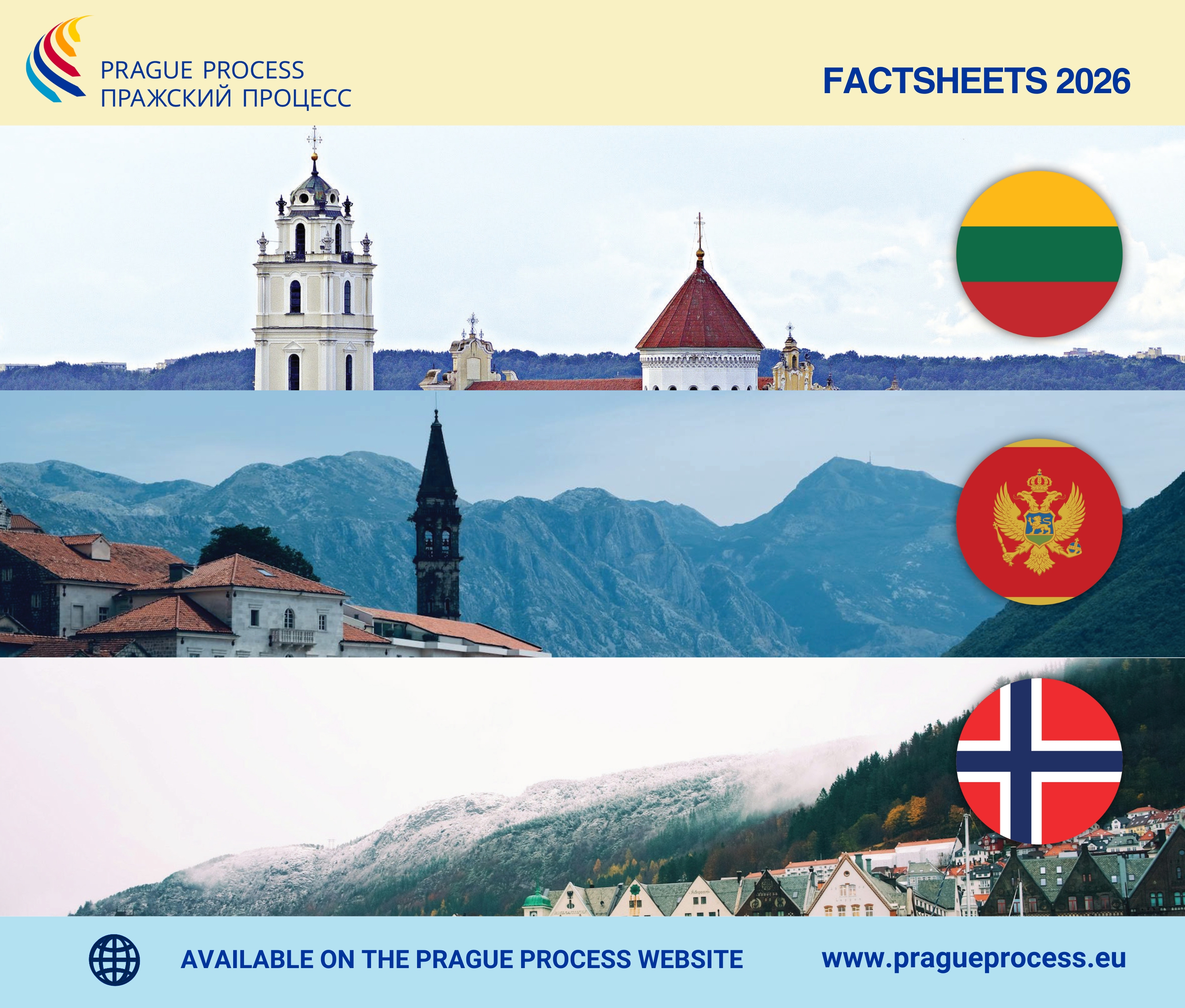
We have the pleasure to inform you that the Prague Process has introduced the regular update of the country factsheets, now featuring the latest migration-related trends and policy developments in Lithuania, Montenegro and Norway.
Here are a couple of highlights that offer a glimpse into recent developments. Explore the full version of the factsheets to review the detailed analysis and data.
Lithuania: Sustained immigration growth
- Lithuania, long characterised by high emigration, has undergone a gradual but notable shift in recent years, with immigration exceeding emigration every year since 2019. This turning point has helped ease the country’s long-term demographic decline. The exceptional inflows of 2022 – reaching 87,367 arrivals and driven largely by the war in Ukraine – have stabilised, but immigration levels remain higher than before, with over 51,000 immigrants registered in 2024. Of these, 32,823 were foreigners, with the largest groups coming from Ukraine (6,877), Belarus (5,229) and Uzbekistan (3,223), and the remainder were returning Lithuanians. This is confirmed by the rising number of residence permits. Since 2015, the number of first-time residence permits issued to non-EU nationals in Lithuania increased ten-fold, from 5,178 in 2015 to over 54,000 in 2024, with the majority issued for work reasons. In 2024, close to 165,000 non-EU nationals, of which over 35% were Belarus nationals, had valid residence permits in Lithuania.
Montenegro: Decrease in apprehensions at the border
- Montenegro is one of the smallest countries in the Western Balkans, with an estimated population of 623,327 as of 1 January 2025. Like other Western Balkan countries, Montenegro continues to experience mixed migration flows. In 2024, 3,153 migrants were apprehended for illegal border crossing, a 40% decrease compared with 2023. The largest groups were nationals of Syria, Afghanistan, and Iran.
Norway: More restrictive migration policy
- In 2025, Norway pursued a more restrictive course in migration policy, reflecting growing domestic concern over capacity and sustainability. Key changes include the implementation of the Return Strategy 2025-2030, which aims to streamline both voluntary and forced returns. Emphasising humane processes, the strategy also strengthens reintegration support and bilateral co‑operation with origin countries. Stricter subsistence requirements for family immigration were introduced in January 2025, raising the income threshold for sponsors. Recognition of qualifications has been restructured. Foreign education is now more rapidly assessed, with a five‑day fast-track option for employers. A new automatic recognition scheme supports smoother access to the labour market, especially for citizens from Ukraine and EEA states.
All the factsheets can be accessed through the interactive map here.
The factsheets offer concise and valuable insights in the migration landscape of these countries, providing data from both national and international sources. They also highlight key developments in migration policies and legislation. While the national data is updated by the Secretariat and ICMPD colleagues as well as external experts, the data from international sources is refreshed automatically as it becomes available.
Our Repository contains the latest publications of the Migration Observatory and Training Academy of the Prague Process.
Subscribe to the Prague Process mailing list here in order to keep up to date with the latest developments through our Quarterly Review.