
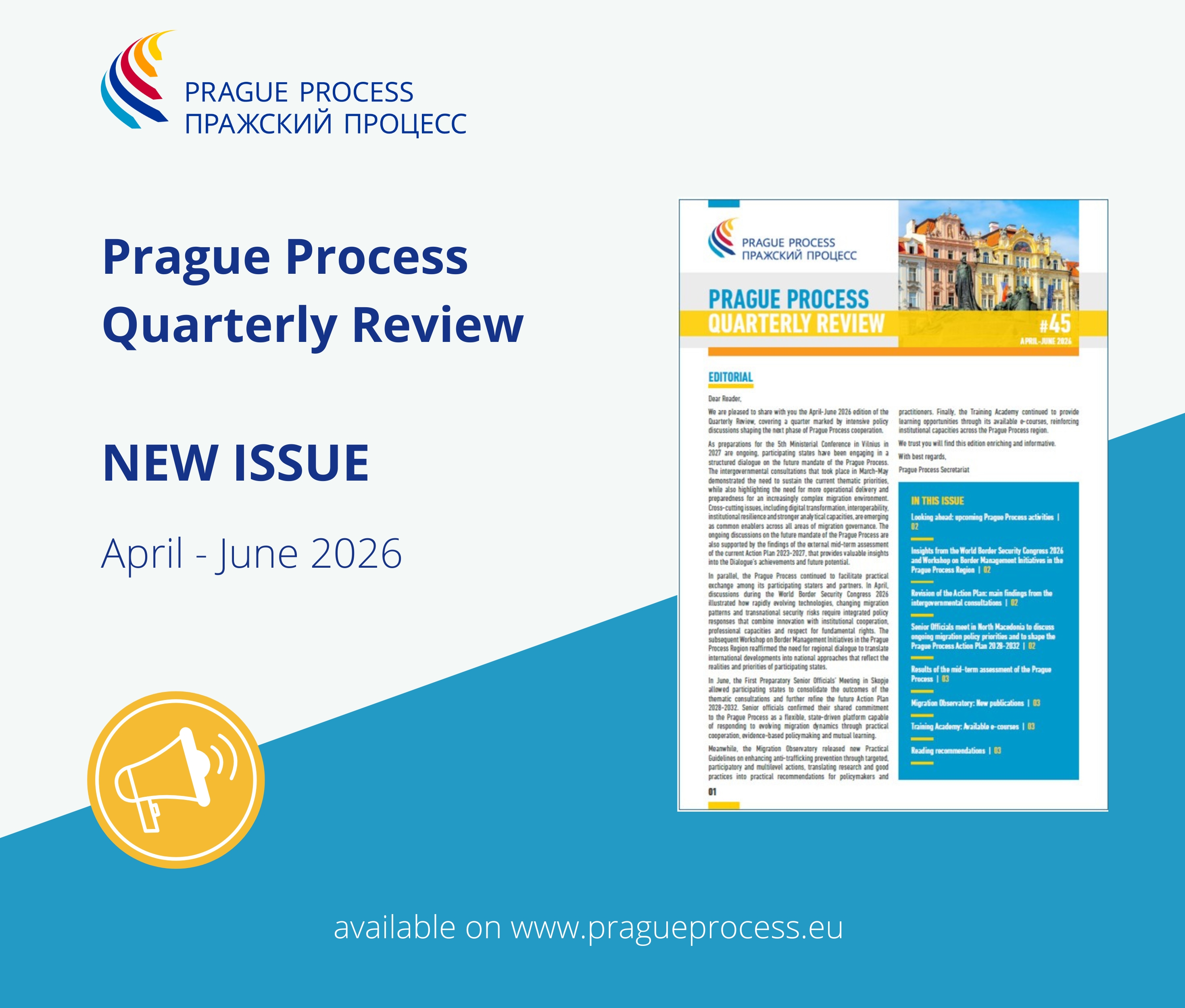
We are pleased to present the April-June 2026 edition of the Quarterly Review, featuring the latest updates from the Prague Process.
As preparations for the 5th Ministerial Conference in Vilnius in 2027 are ongoing, participating states have been engaging in a structured dialogue on the future mandate of the Prague Process. The intergovernmental consultations that took place in March-May demonstrated the need to sustain the current thematic priorities, while also highlighting the need for more operational delivery and preparedness for an increasingly complex migration environment. Cross-cutting issues, including digital transformation, interoperability, institutional resilience and stronger analytical capacities, are emerging as common enablers across all areas of migration governance. The ongoing discussions on the future mandate of the Prague Process are also supported by the findings of the external mid-term assessment of the current Action Plan 2023-2027, that provides valuable insights into the Dialogue’s achievements and future potential.
In parallel, the Prague Process continued to facilitate practical exchange among its participating staters and partners. In April, discussions during the World Border Security Congress 2026 illustrated how rapidly evolving technologies, changing migration patterns and transnational security risks require integrated policy responses that combine innovation with institutional cooperation, professional capacities and respect for fundamental rights. The subsequent Workshop on Border Management Initiatives in the Prague Process Region reaffirmed the need for regional dialogue to translate international developments into national approaches that reflect the realities and priorities of participating states.
In June, the First Preparatory Senior Officials' Meeting in Skopje allowed participating states to consolidate the outcomes of the thematic consultations and further refine the future Action Plan 2028-2032. Senior officials confirmed their shared commitment to the Prague Process as a flexible, state-driven platform capable of responding to evolving migration dynamics through practical cooperation, evidence-based policymaking and mutual learning.
Meanwhile, the Migration Observatory released new Practical Guidelines on enhancing anti-trafficking prevention through targeted, participatory and multilevel actions, translating research and good practices into practical recommendations for policymakers and practitioners. Finally, the Training Academy continued to provide learning opportunities through its available e-courses, reinforcing institutional capacities across the Prague Process region.
The issue is available for download in English and Russian.
To see all issues please go to the section "Quarterly Review" under News & Events.