
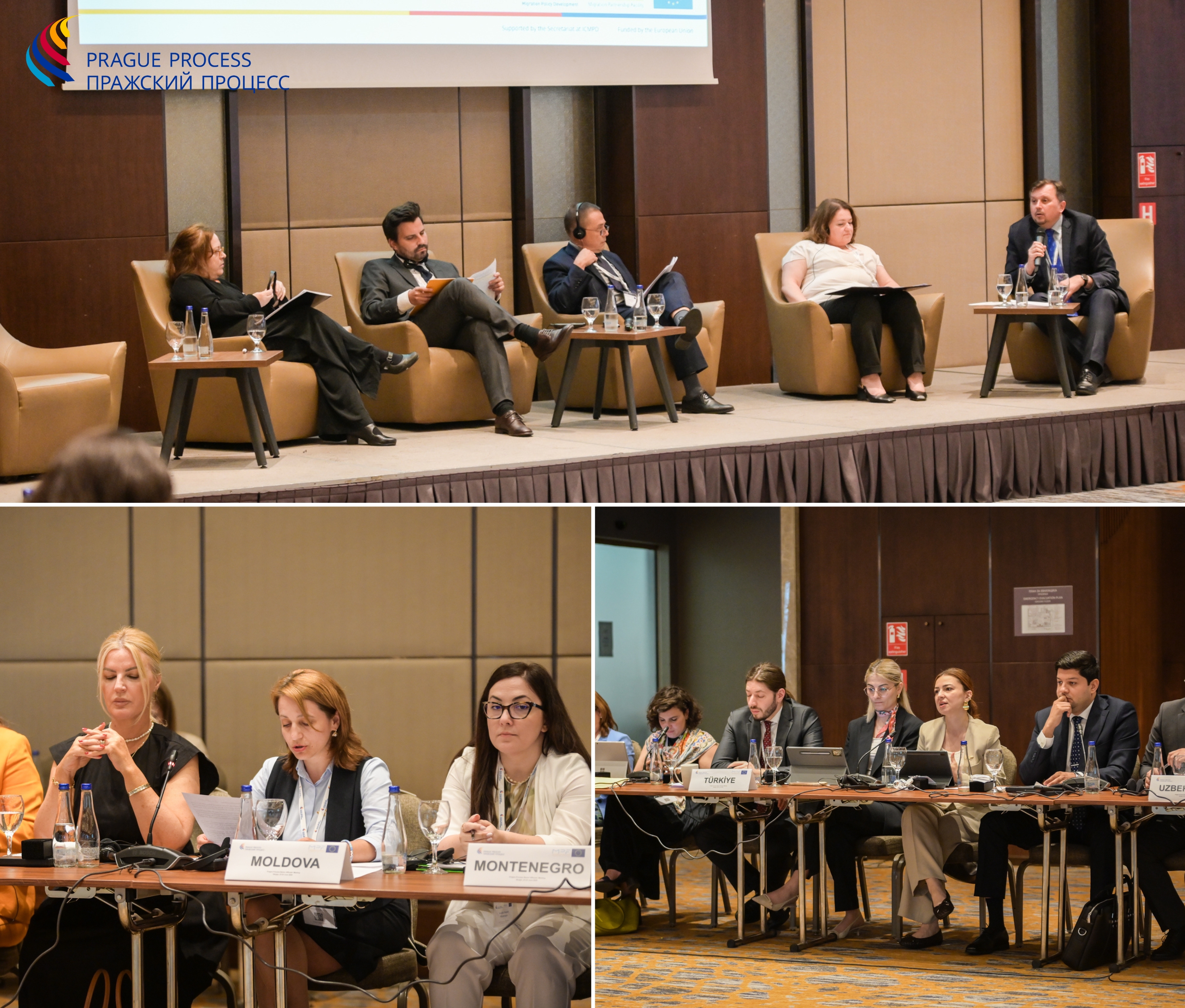
On 23–24 June 2026, the 1st Preparatory Senior Officials’ Meeting (SOM) towards the 5th Prague Process Ministerial Conference took place in Skopje, North Macedonia. Senior representatives of more than 30 participating states, the European Commission, UN and EU Agencies, as well as other international organisations gathered to discuss ongoing migration policy priorities and the future direction of the Prague Process. In January 2027, the Lithuanian Presidency of the Council of the EU will be hosting the 5th Ministerial Conference in Vilnius where Ministers are expected to endorse a Joint Declaration and Action Plan for the period 2028–2032. This SOM allowed the participating states and partner organisation to jointly review and further develop the draft Action Plan, while exchanging perspectives on key migration trends and regional priorities.
The Senior Officials’ Meeting reaffirmed the importance of the Prague Process as a flexible and operational migration dialogue, enabling participating states to address common challenges through cooperation, knowledge exchange and practical partnerships.
Opening the meeting, Mr. Panche Toshkovski, Minister of Internal Affairs of the Republic of North Macedonia, emphasised that the Prague Process enables practical cooperation between countries, institutions and experts who work in the field every day. "If we want migration policies to yield results, it is necessary for the countries through which migration routes pass to be equally involved in the creation and implementation of solutions. Only through joint projects, joint capacities and harmonized procedures can we build a sustainable system that will respond to contemporary challenges," said Minister Toshkovski.
Furthermore, the Minister highlighted the need for stronger cooperation between the EU and the Western Balkans in the context of the implementation of the EU Pact on Migration and Asylum. “Policy without partnership is a list of good intentions. Rules without resources are paper. If the Western Balkans have a fighting chance - through funding, technical help, and real partnership - then the Pact can become a shared success.”
Minister Toshkovski underlined North Macedonia’s continued commitment to strengthening border management, protecting vulnerable people and combating migrant smuggling, while calling for predictable funding, operational support and formal partnership mechanisms to ensure effective implementation of migration policies across the region.
Shaping the future mandate of the Prague Process
The first day of the meeting focused on the roadmap towards the 5th Prague Process Ministerial Conference and the development of the Prague Process Action Plan 2028–2032. Participants reviewed the key findings from the intergovernmental thematic consultations and provided feedback on the draft Action Plan by highlighting their national priorities and concrete areas for further development.
Addressing regional migration dynamics
The discussions also addressed key migration trends and policy developments, including labour mobility and the implications of changing migration patterns for governance and cooperation. Particular attention was given to the Western Balkan states, which are attracting increasing numbers of labour migrants.
The consequences of Russia’s war of aggression against Ukraine remained high on the agenda. Participants exchanged experiences related to the protection and inclusion of displaced Ukrainians, as well as future approaches to return, reintegration and long-term recovery. The discussion highlighted the value of cooperation between countries of origin, host countries and international organisations in responding to large-scale displacement situations.
Strengthening preparedness and resilience in the context of the EU Pact
The second day focused on operational responses to migration challenges. Discussions examined the implementation of the EU Pact on Migration and Asylum, including institutional preparedness, legislative alignment and implications for cooperation with non-EU partners. Participants also explored ways to strengthen state resilience and preparedness through enhanced institutional, operational and technological capacities, while ensuring effective migration governance and compliance with legal and humanitarian obligations.
The meeting concluded with an exchange on operational cooperation across the Prague Process region, highlighting good practices and lessons learned in addressing national priorities and needs.
Towards the next Ministerial Conference
As preparations for the 5th Prague Process Ministerial Conference continue, the outcomes of the Senior Officials’ Meeting in Skopje contribute to the further development of the Action Plan 2028-2032 and Ministerial Declaration. The discussions reaffirmed participating states’ commitment to strengthening cooperation and ensuring that the Prague Process remains a relevant platform for addressing migration challenges through practical, evidence-based and forward-looking solutions.