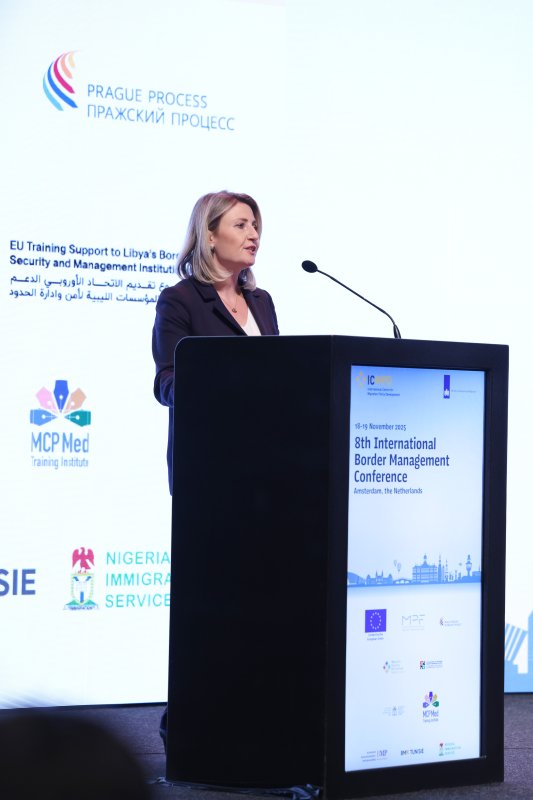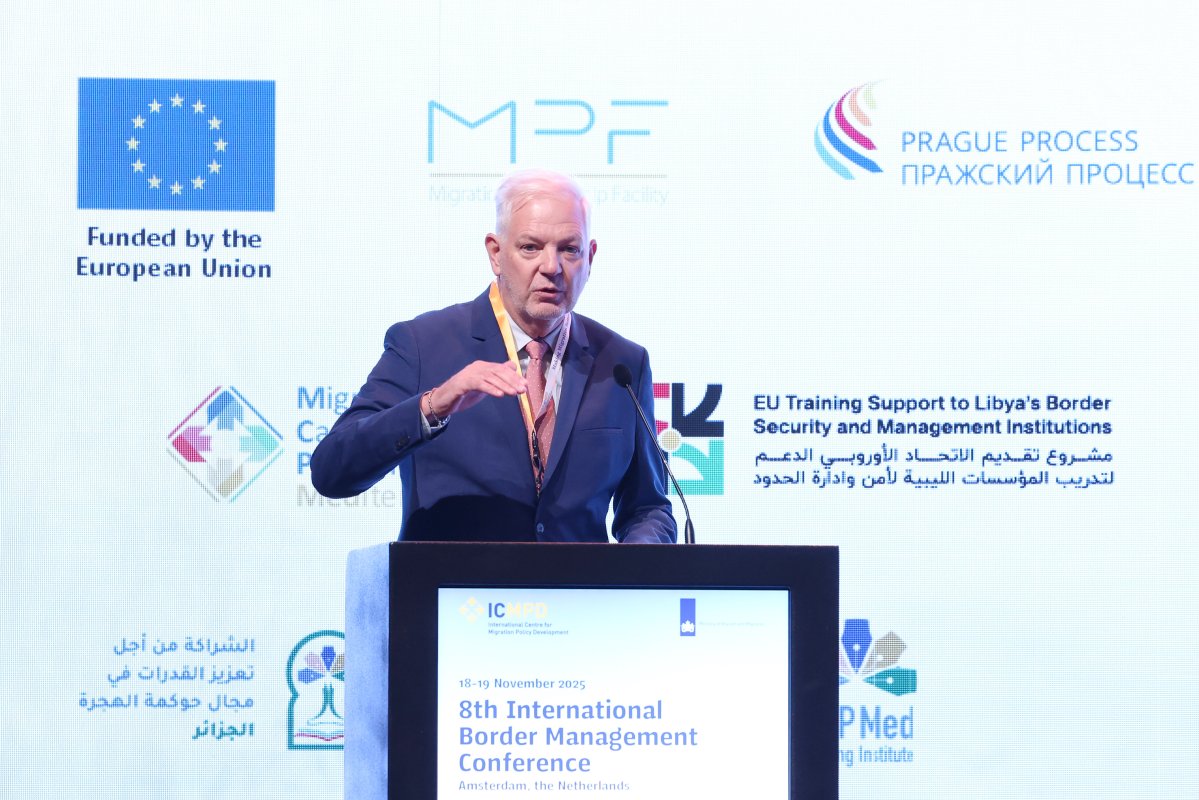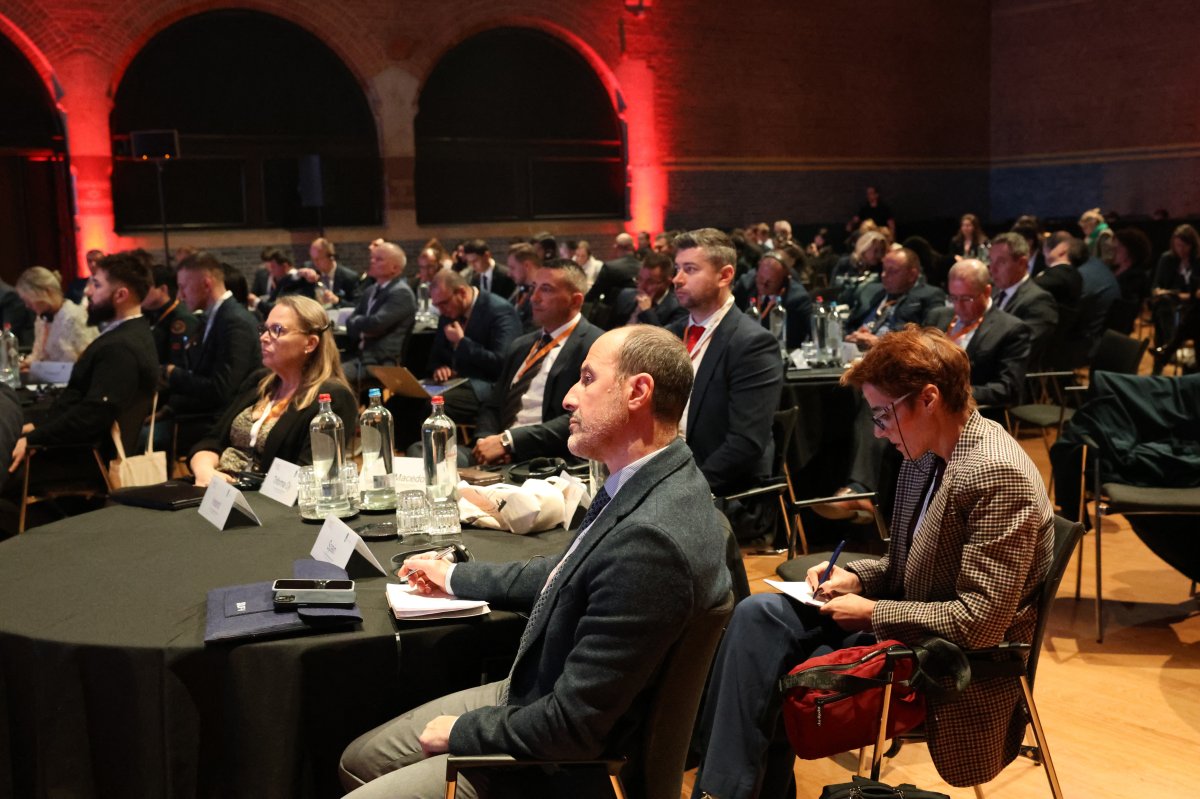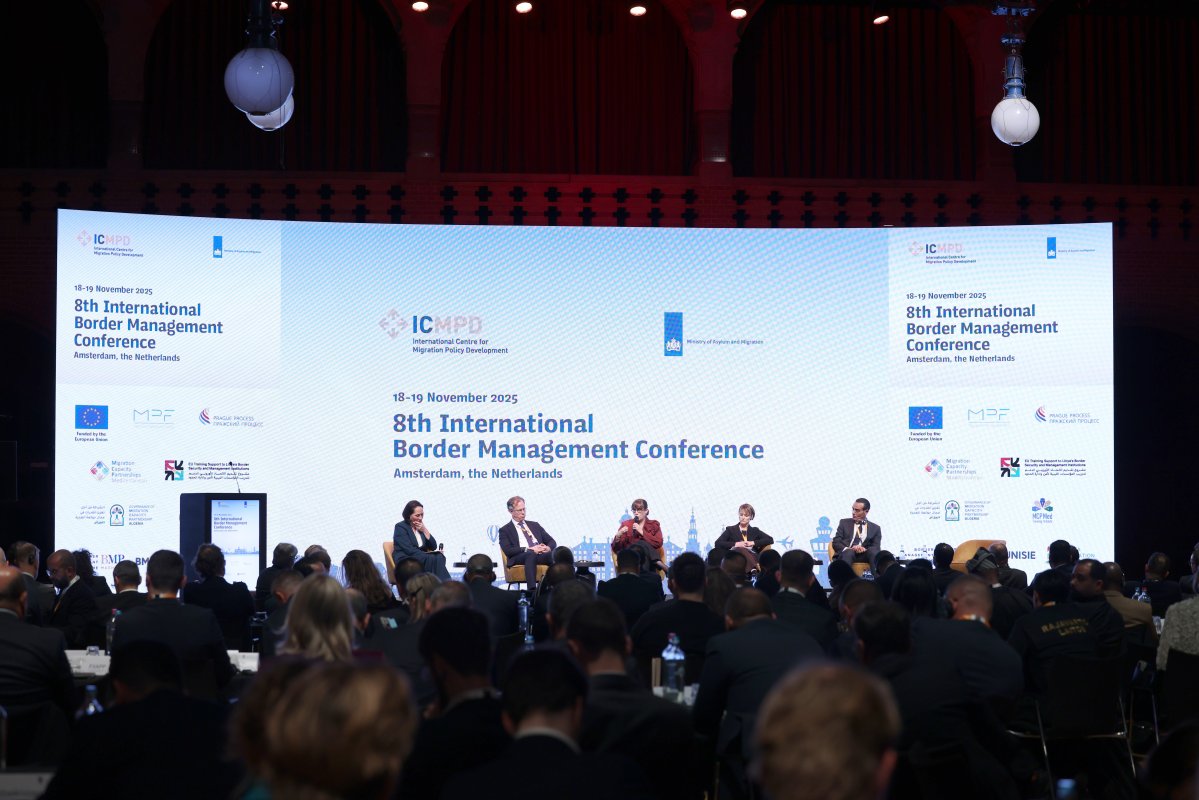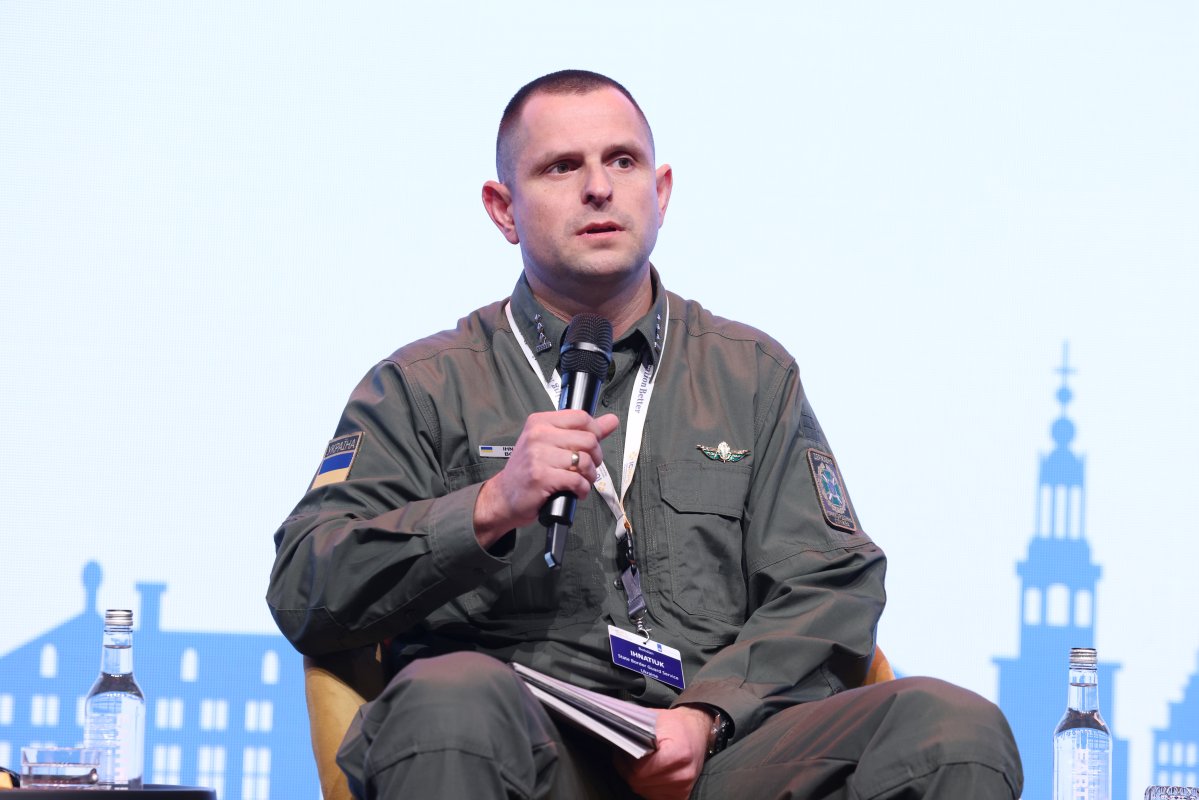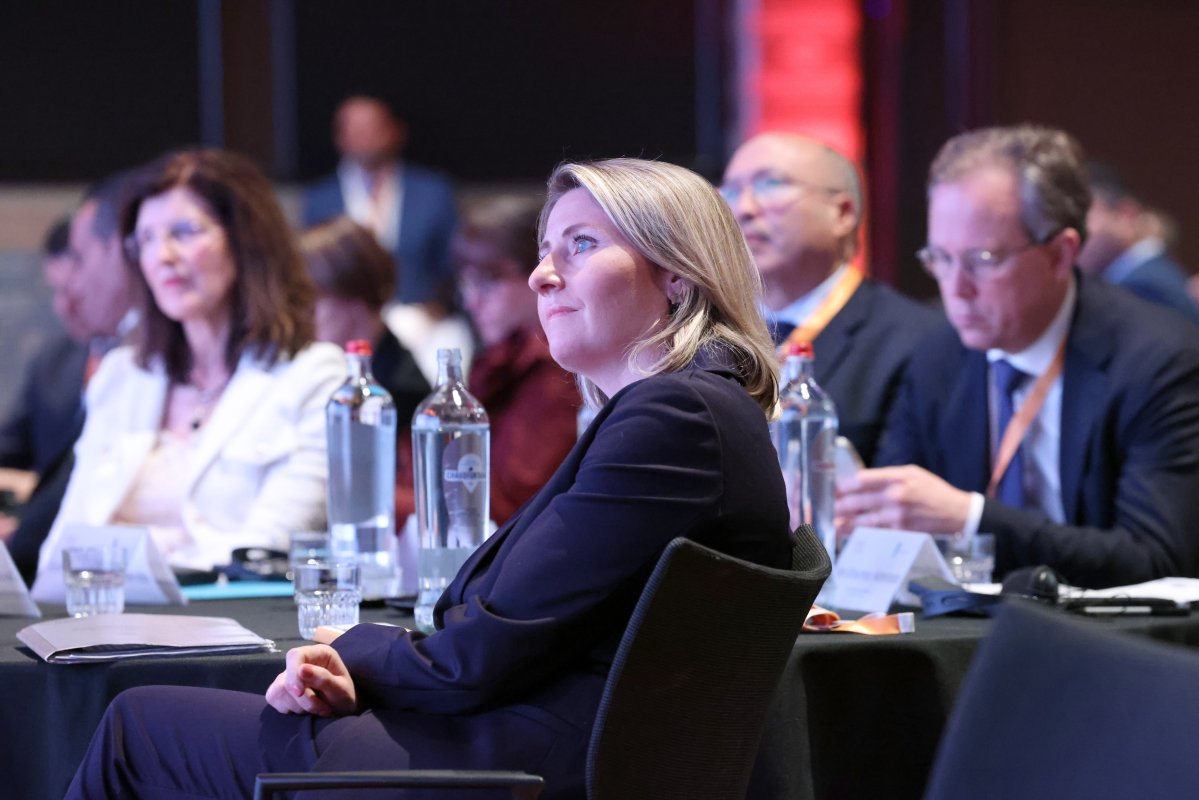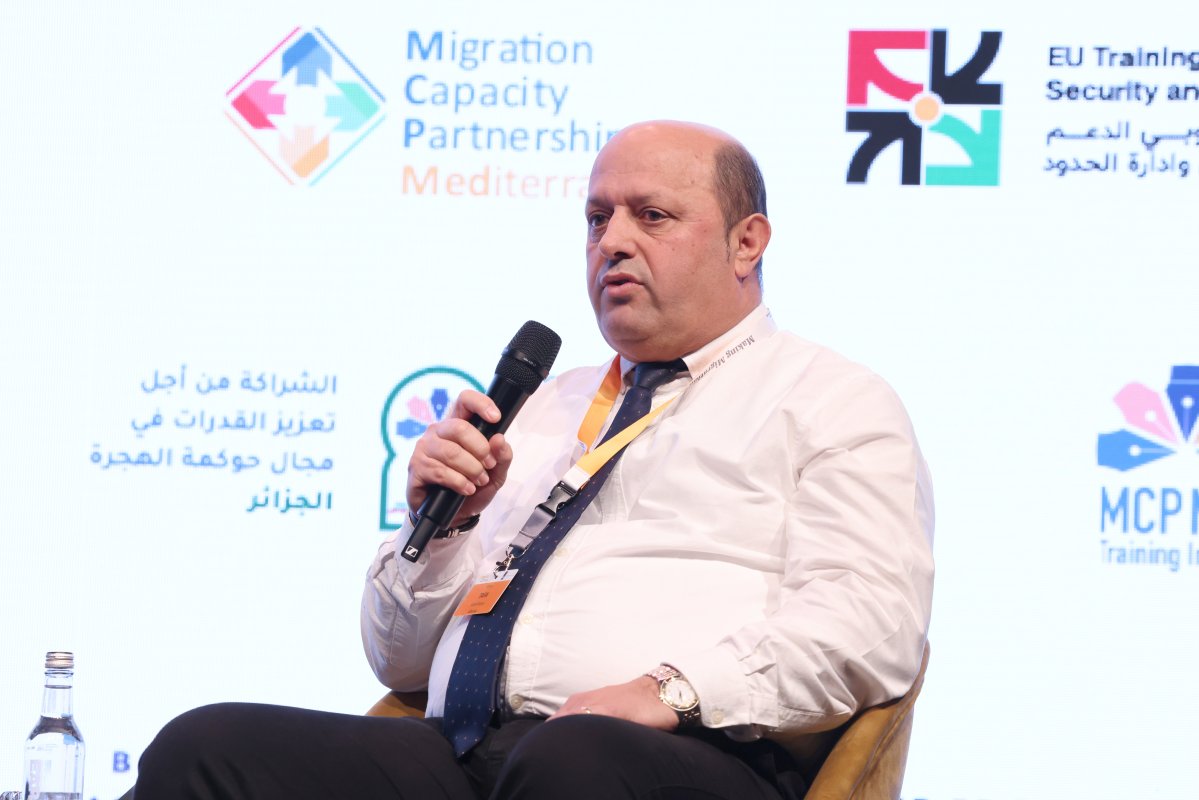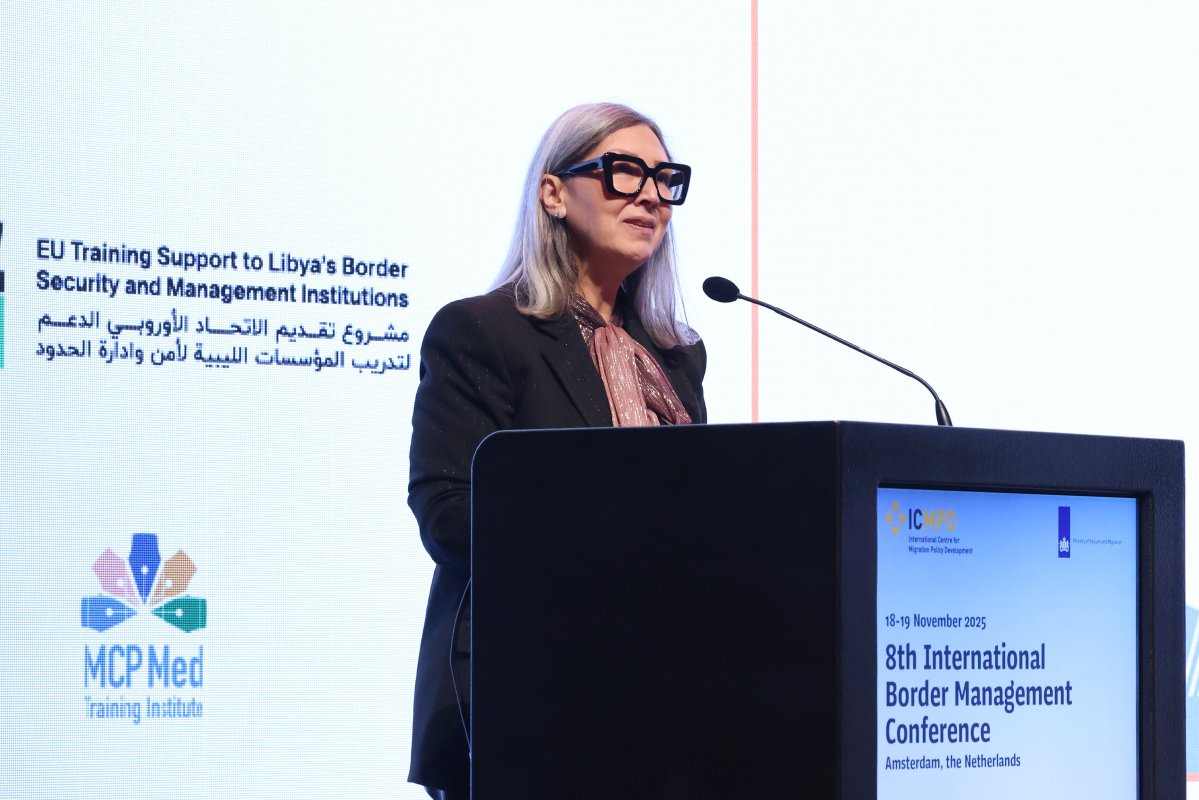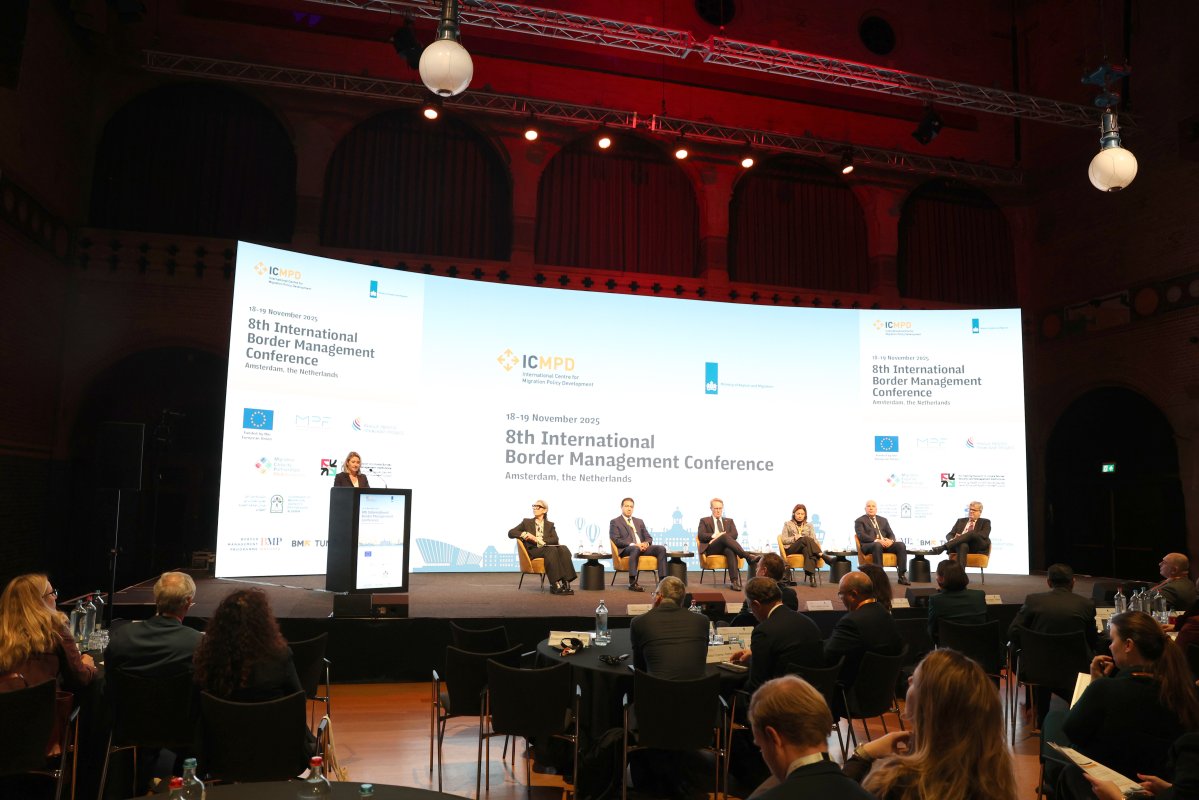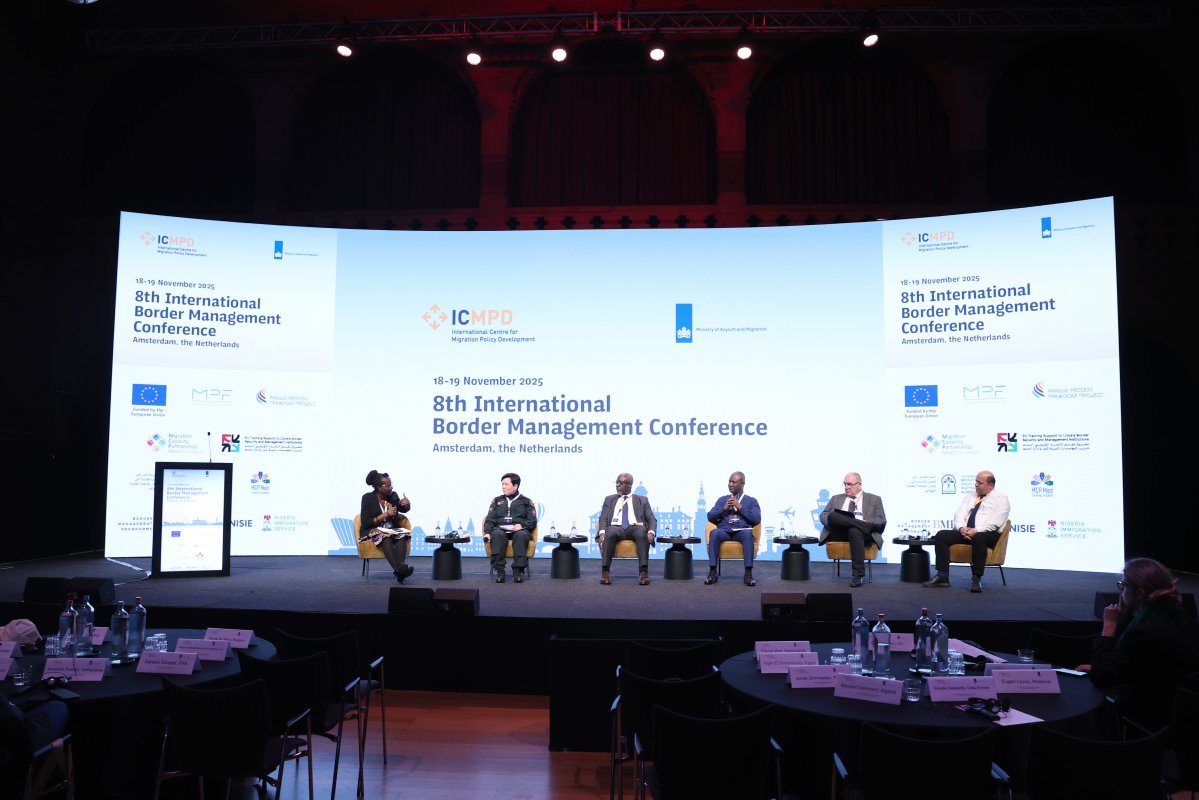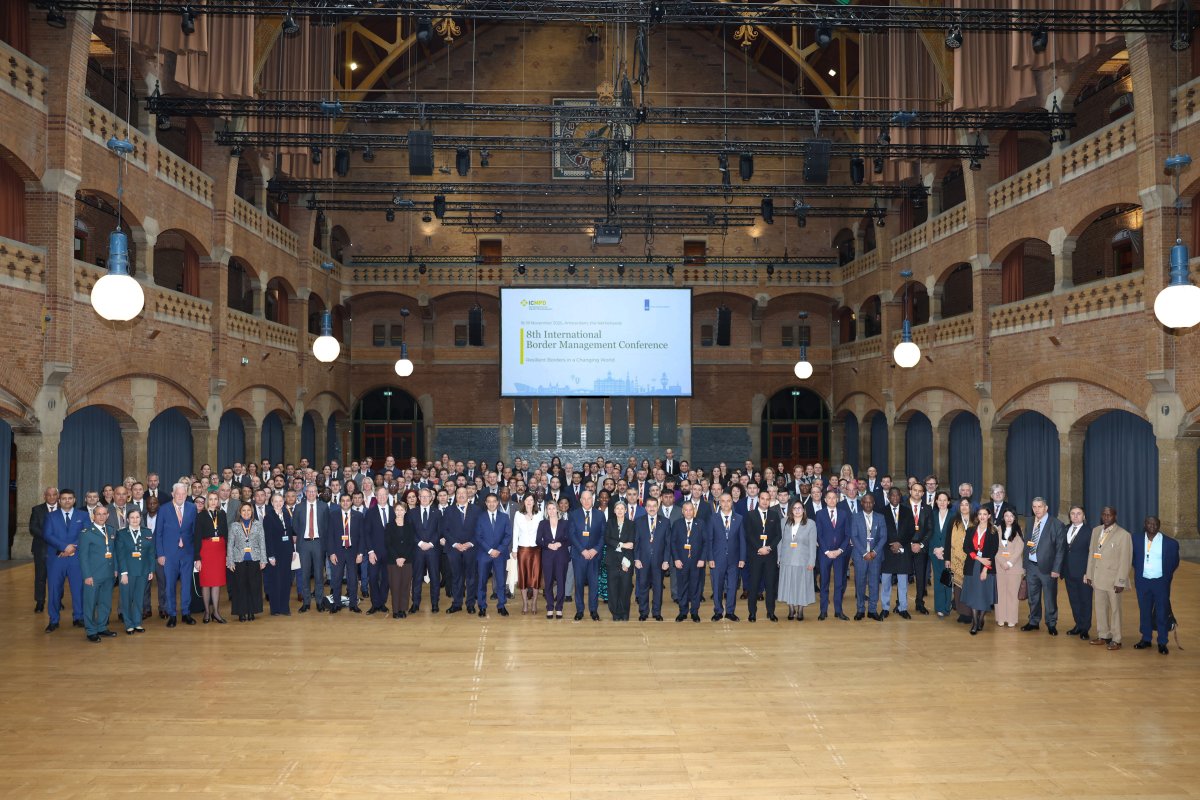
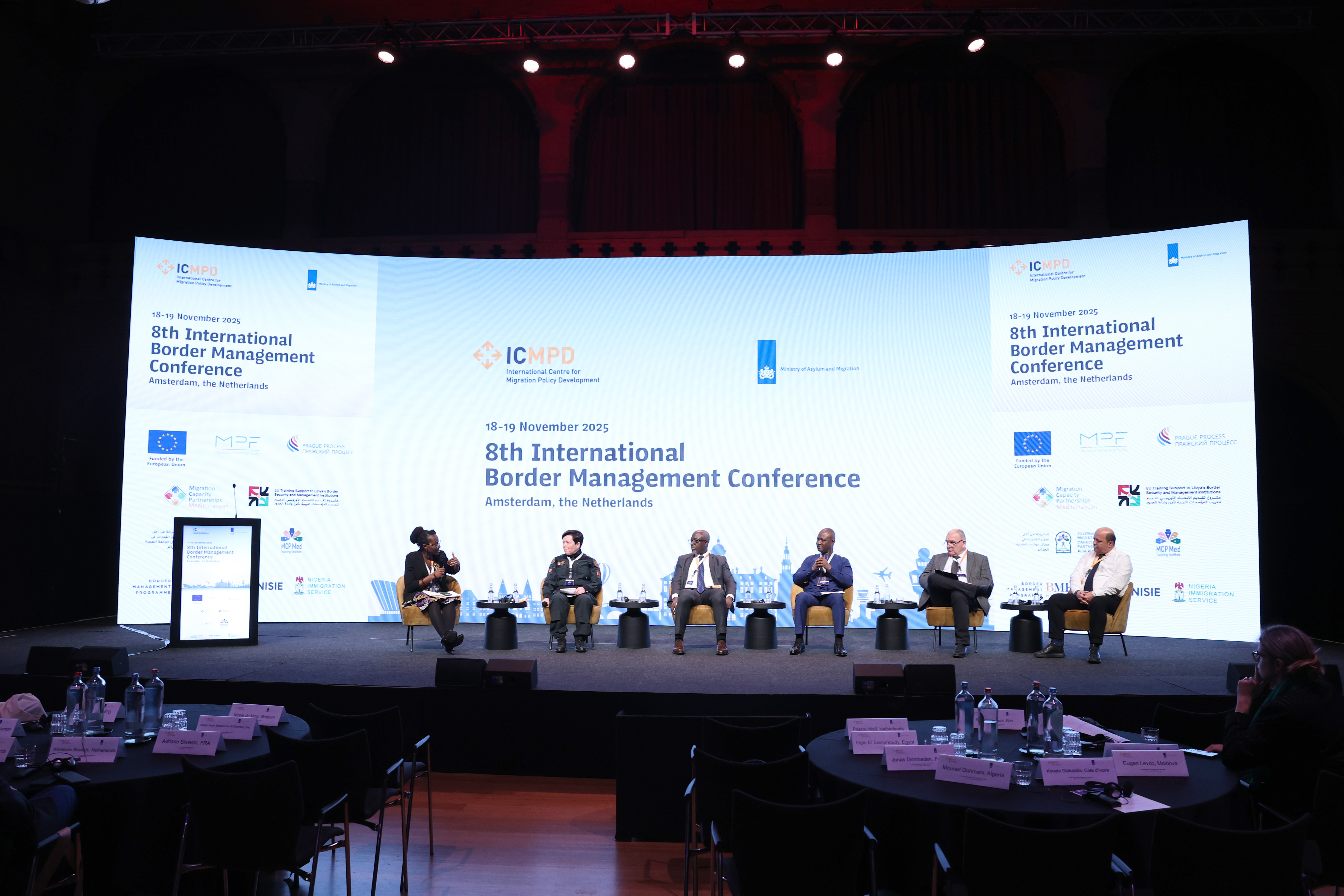
On 18-19 November 2025, the International Centre for Migration Policy Development (ICMPD), together with the Ministry of Asylum and Migration of the Kingdom of the Netherlands, organised the 8th International Border Management Conference (IBMC) in Amsterdam. Held under the theme “Resilient Borders in a Changing World”, this year’s edition brought together more than 200 delegates from 44 countries, including EU Member States, ICMPD partner countries, and representatives of international organisations, agencies, civil society, and human rights institutions. As in previous years, the Prague Process supported the participation of 23 representatives from its participating non-EU states.
As ICMPD’s flagship annual event on border governance, the IBMC again provided a strategic platform for dialogue, exchange and cooperation. Through on‑ and off‑stage interactions with panellists and keynote speakers, Prague Process participants strengthened their knowledge and cooperation networks, gained insights into emerging trends, exchanged experiences, and enhanced their sectoral expertise.
In his opening remarks, HE Mr David van Weel, Minister of Asylum and Migration of The Netherlands, emphasised the shared responsibility of states in addressing migration and security challenges:
“The challenges before us are great, but if we address them together we can improve the system. We can enhance security across the entire Schengen area and beyond, helping prevent irregular migration and cross-border crime. At the same time, we will facilitate legitimate travel and trade as much as possible.”
Over the two-day programme, high-level panels explored how national and regional border management systems can adapt to a period marked by geopolitical uncertainty, complex mobility dynamics, hybrid threats and rapid technological change. Speakers from the European Commission, Frontex, ECOWAS, the Mixed Migration Centre, and national border authorities shared insights on evolving cooperation models and the operationalisation of integrated border management principles. Key highlights included:
- Evolving border‑management architecture: Another important strand was the EU’s evolving border management architecture in the context of implementing the EU Pact, safeguards for vulnerable people, and the role of national independent monitoring.
- Ethical deployment of new technologies: Virtual reality for trainings, ethical use of technologies, modern approaches to knowledge-sharing, and best-practices to operationalise human rights safeguards and legal standards.
- Breakout sessions featured practitioners sharing real‑world examples of integrating human‑rights protections into daily border‑management practices. Discussions addressed coordinated responses to irregular movements, identity and document fraud, and promoted women’s empowerment within border‑management institutions.
For the Prague Process states and partners, the outcomes of the 8th IBMC underscore the value of sustained engagement, knowledge sharing, and capacity development across the region. As countries navigate an evolving border‑management landscape shaped by new technologies, shifting migration dynamics, and heightened security concerns, the lessons exchanged at IBMC will feed into future cooperation, national strategies and joint capacity‑building efforts.